
Business cards that still work in a digital world
Everyone has a phone, so do business cards still matter? For local businesses, yes, if they're designed for how people use them today. Here's what a good card includes and what to leave off.

It's tempting to think business cards are a thing of the past. Everyone has WhatsApp, everyone can search on Google. Yet in Indian shops, clinics and offices, cards are still everywhere: in a bowl by the billing counter, tucked into a sweet box, handed over at the end of a consultation.
They still work, because they do something a phone can't: they stay in someone's wallet, on their fridge or in their drawer, and remind them of you weeks later. This post is about designing a card that does that job well today.
What a business card is for now
A card used to carry all your contact details. Today, its main job is different: to get the customer from paper to your phone, WhatsApp or website as quickly as possible, and to remind them of you until they do.
That changes what belongs on it. A card crowded with every detail you can think of is harder to use than a calm card with a few clear ones and a quick way to reach you.
What to include
- Your logo, clear and correctly placed
- Your business name, exactly as on your sign and Google listing
- One line on what you do, if it isn't obvious from the name
- Your phone and WhatsApp number, in an easy-to-read format, such as +91 98765 43210
- Your website address, short and simple
- Your area or address, if customers visit you
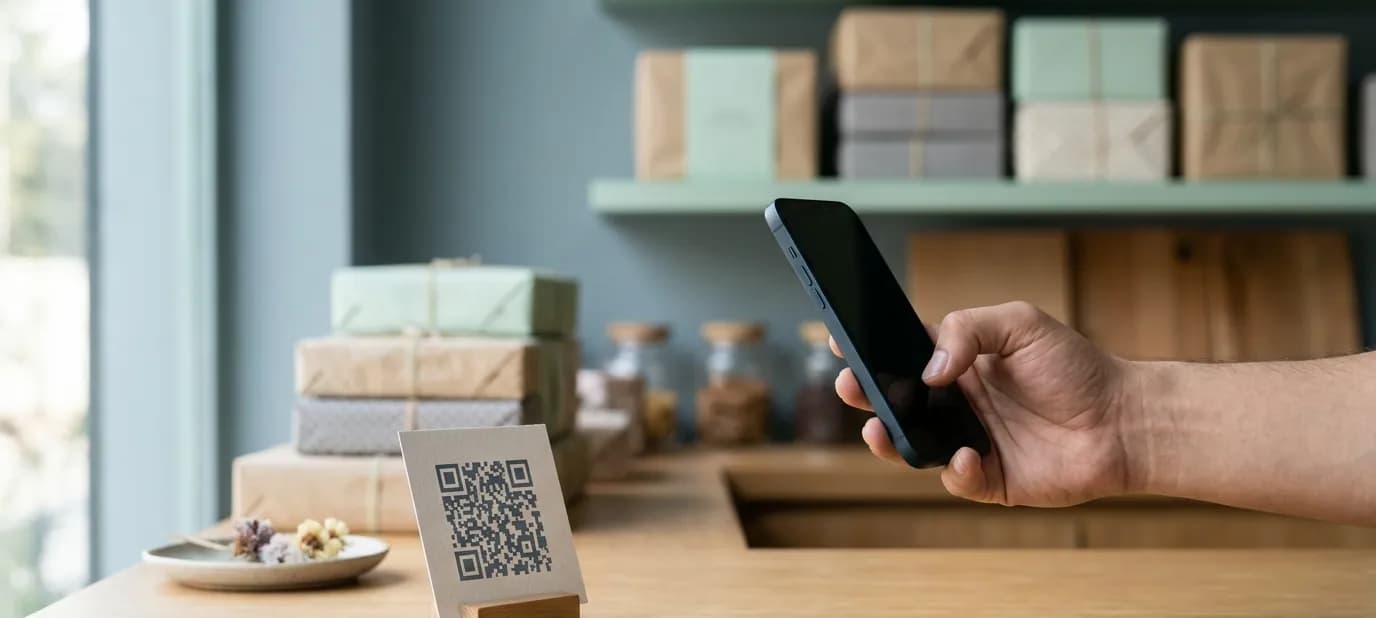
- A QR code, so people can reach you in one scan
If it's a personal card for a doctor, consultant or manager, add the person's name and role.
The QR code: the most useful part of a modern card
A QR code turns a card into a doorway. Where should it lead? Choose one destination, based on what you most want customers to do:
- WhatsApp chat, with a short message already typed, for businesses that take orders or enquiries
- Your website, for businesses with a menu, catalogue or services to explore
- Your Google listing, for directions and reviews
- Your Instagram, for visual businesses like boutiques and bakeries
Print a few words next to it, such as “Scan to WhatsApp us”, so people know what they'll get. We cover QR codes in depth in QR codes for shops.
What to leave off
- Every phone number the business has ever had. One or two, clearly labelled.
- Long lists of services. That's what your website is for.
- Fax numbers and old email addresses
- Social media icons without handles, which tell people nothing
- Tiny text that nobody can read without glasses
Design that matches your brand
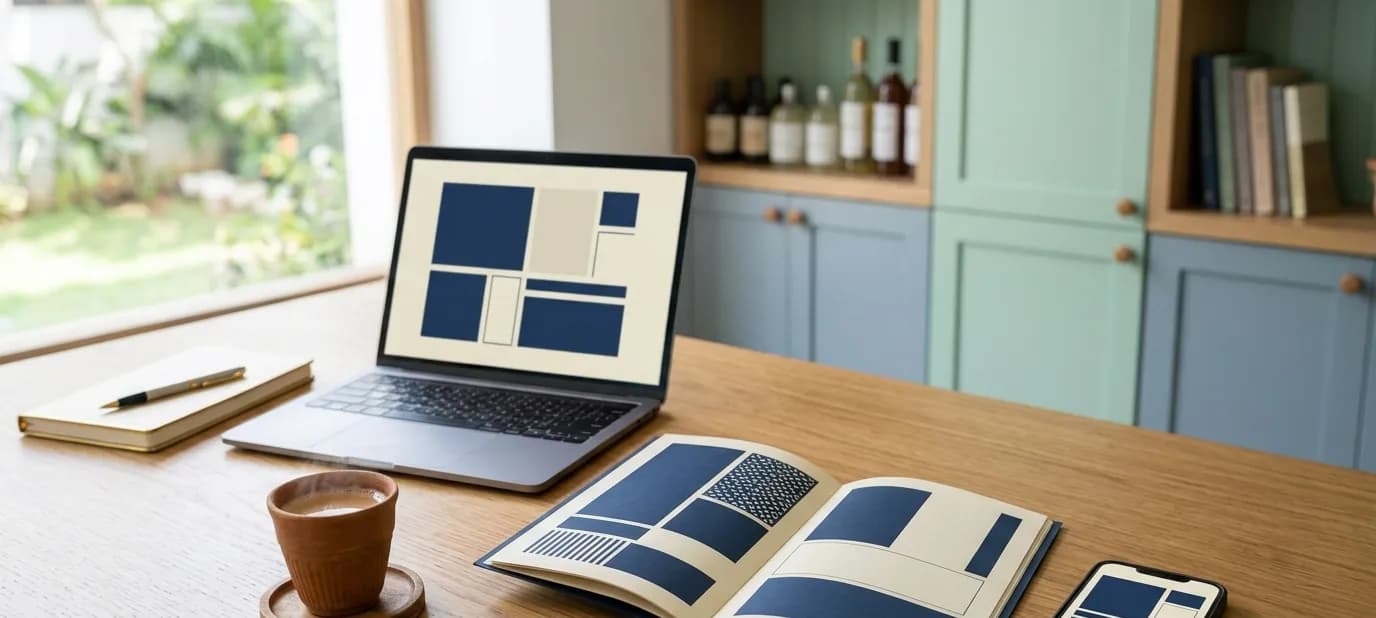
Your card is often the first piece of your brand a customer takes home. It should look like everything else:
- The same colours and fonts as your sign, website and profiles
- The right version of your logo, with space around it
- Plenty of empty space, which makes a card feel more premium, not less
See one look everywhere and keeping your print and online branding consistent.
Paper and finish
A card that feels thin and flimsy undercuts even a good design. You don't need anything fancy, but it's worth choosing:
- Thicker card, which feels more substantial in the hand
- A matte finish, which is easier to write on and looks calm
- Special touches, like a raised logo or a coloured edge, only if they suit your brand
Ask your printer for a sample before printing a full batch, and check the colours against your brand colours.
Where to use them
A card only works if it reaches people. A few places where cards earn their keep for local businesses:
- In every gift box or delivery bag, so the person who receives it knows where it came from
- At the billing counter, in a small holder customers can take from
- After a consultation or meeting, handed over personally
- At exhibitions, weddings and events where you're showing your work
- Left with partner businesses who recommend you, such as a caterer and a decorator
Check before you print
- Is every number and address exactly the same as on Google and your website?
- Does the QR code scan quickly from a normal phone, in shop lighting?
- Is all the text readable at arm's length?
- Have you checked a printed proof, not just the screen?
Getting help
Business cards are part of our print design service. We design them in your brand, with QR codes that lead to your website, WhatsApp or reviews, and prepare print-ready files for your printer. Tell us if you'd like help arranging the printing too.
In short
- Today a business card's main job is to get customers from paper to your phone, WhatsApp or website.
- Keep it simple: logo, name, phone and WhatsApp, website, area and a clearly labelled QR code.
- Match your brand, choose decent card, and check every detail against your Google listing before printing.